
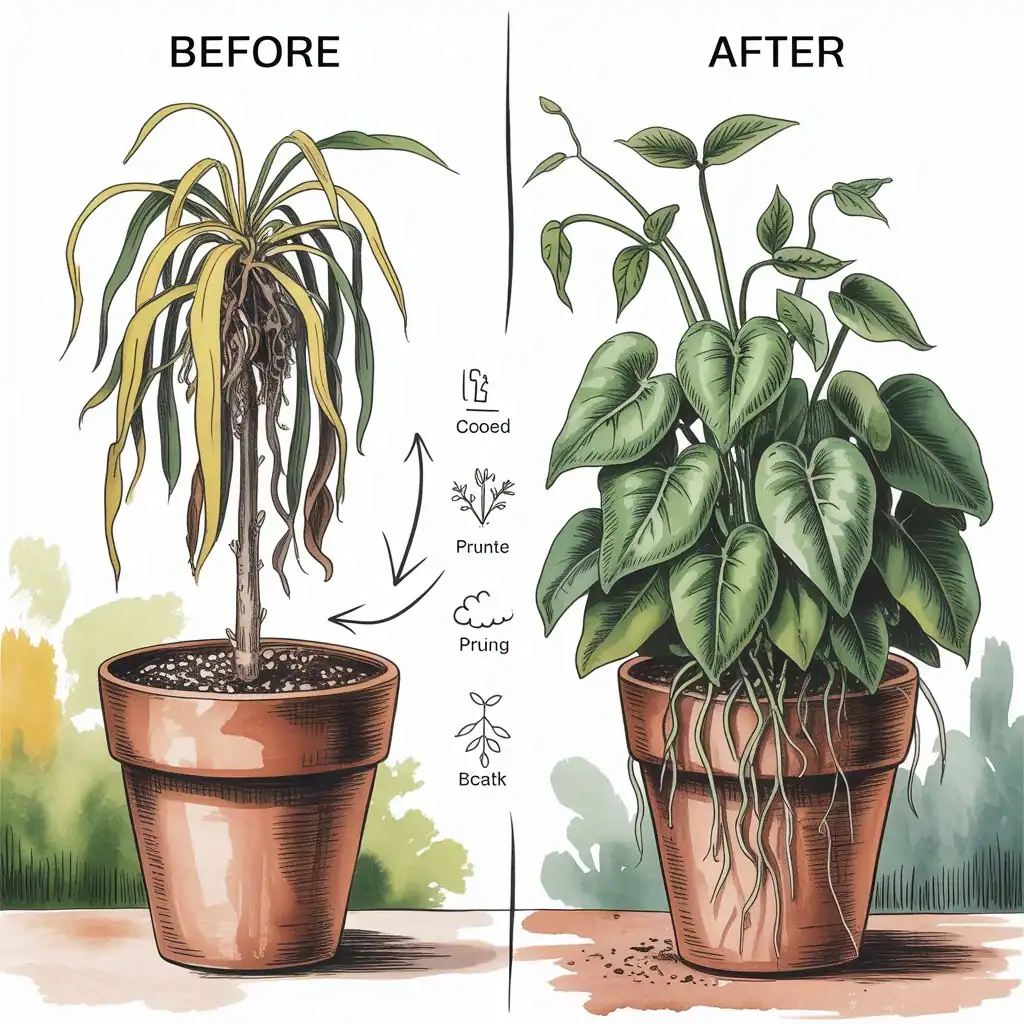
How to Revive a Plant That Looks Beyond Saving
It’s easy to assume a struggling plant is beyond saving—but in many cases, plants are far more resilient than they seem. With the right approach, you can often bring even a very unhealthy plant back to life. The key is to identify the problem, act quickly, and simplify your care routine.
Step 1: Identify the Problem First
Before doing anything, take a close look at your plant. Common signs include yellow leaves, drooping stems, dry soil, or a musty smell from the roots. Each symptom points to a different issue such as overwatering, underwatering, poor light, or root damage.
Step 2: Check the Roots
The roots are the foundation of your plant’s health. Gently remove the plant from its pot and inspect them.
- Healthy roots are firm and light in color
- Rotten roots are dark, mushy, and may smell unpleasant
What to do: Trim away any damaged roots and keep only the healthy ones before repotting.
Step 3: Refresh the Soil
Old or compacted soil can hold too much moisture or lack nutrients.
What to do: Replace the soil with fresh, well-draining mix that suits your plant type. This gives the roots a better environment to recover.
Step 4: Adjust Your Watering Routine
Incorrect watering is one of the main reasons plants decline.
- If the soil is constantly wet → reduce watering
- If the soil is completely dry → water thoroughly
What to do: Let the soil condition guide your watering instead of following a fixed schedule.
Step 5: Move the Plant to Better Light
A plant that isn’t getting enough light will struggle to recover.
What to do: Place it in a spot with appropriate light—bright but indirect light works for most indoor plants.
Step 6: Prune Damaged Leaves and Stems
Dead or severely damaged parts drain energy from the plant.
What to do: Trim away yellow, brown, or wilted leaves so the plant can focus on new growth.
Step 7: Stabilize the Environment
Avoid moving the plant around too much while it’s recovering.
What to do: Keep it in a stable spot with consistent temperature and no drafts.
Step 8: Be Patient and Avoid Overcorrecting
It’s tempting to try multiple fixes at once, but too many changes can stress the plant further.
What to do: Make gradual adjustments and give your plant time to respond.
Step 9: Hold Off on Fertilizer
Fertilizing a stressed plant can do more harm than good.
What to do: Wait until you see signs of new growth before adding any nutrients.
Step 10: Watch for Signs of Recovery
New leaves, stronger stems, and improved color are all signs your plant is recovering.
What to do: Continue consistent care and avoid returning to old habits that caused the issue.
Final Thoughts
A plant that looks beyond saving often just needs the right conditions to recover. By focusing on roots, light, water, and consistency, you can bring many struggling plants back to life. The most important thing is to stay patient—recovery takes time, but it’s often possible with the right care.