
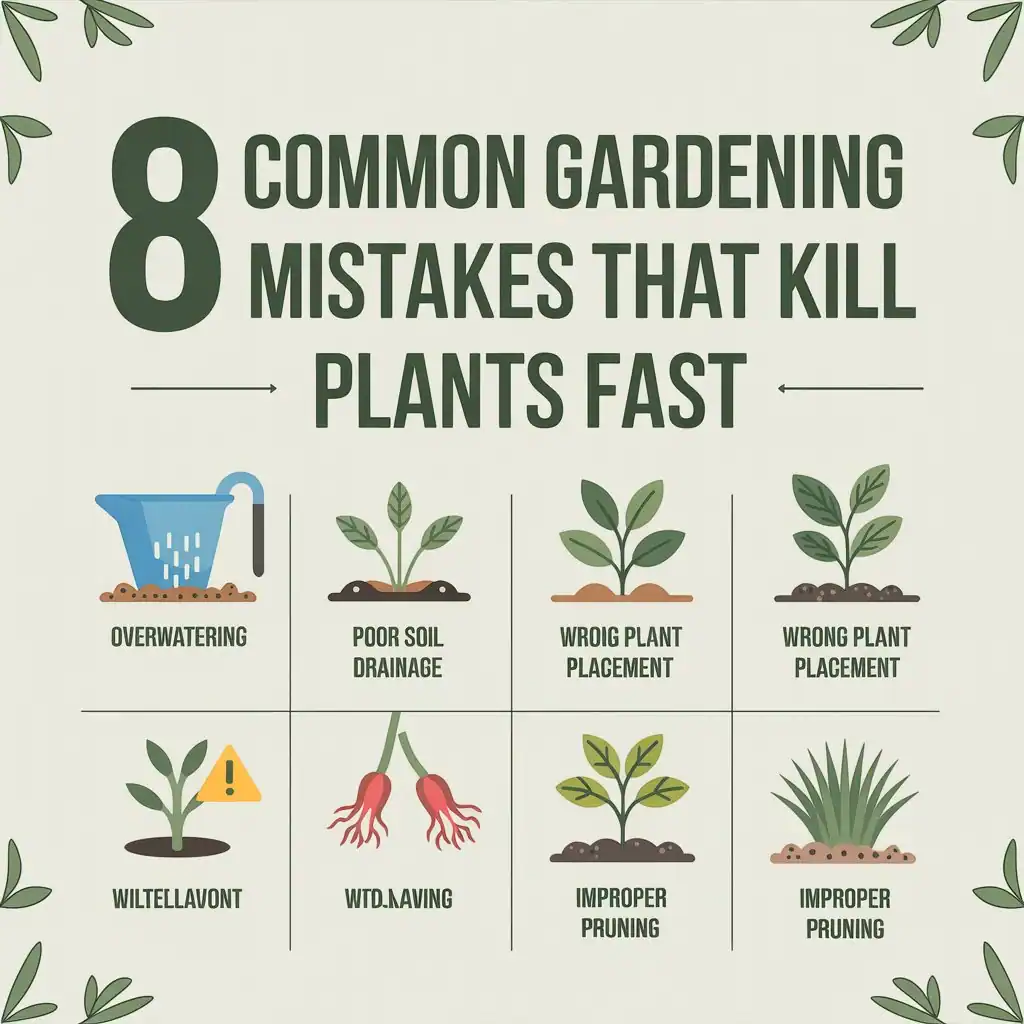
8 Common Gardening Mistakes That Kill Plants Fast
Gardening can be rewarding, but it’s easy to make mistakes—especially when you’re just starting out. Many plants don’t fail because they’re difficult to grow, but because of simple, avoidable errors. Understanding these common mistakes can help you keep your plants healthy and thriving.
1. Overwatering Your Plants
One of the most common mistakes is giving plants too much water. Excess moisture can lead to root rot and prevent roots from getting oxygen.
Fix: Check the soil before watering and only water when it feels dry to the touch.
2. Using the Wrong Type of Soil
Not all plants thrive in the same type of soil. Poor soil can limit nutrients and drainage.
Fix: Choose soil that suits your plant type, whether it’s well-draining soil for succulents or nutrient-rich soil for vegetables.
3. Not Providing Enough Light
Plants need the right amount of light to grow properly. Too little light can weaken them and slow growth.
Fix: Place plants in locations that match their light requirements, whether that’s full sun or partial shade.
4. Ignoring Drainage
Without proper drainage, water can accumulate and damage roots.
Fix: Always use pots with drainage holes or ensure your garden soil allows excess water to escape.
5. Overcrowding Plants
Planting too many plants in one space limits airflow and access to nutrients.
Fix: Give each plant enough room to grow and spread naturally.
6. Forgetting to Adjust Care for Seasons
Plants have different needs depending on the time of year.
Fix: Adjust watering, light, and care routines based on seasonal changes.
7. Using Too Much Fertilizer
More fertilizer doesn’t mean faster growth. Overfeeding can damage plants and burn roots.
Fix: Use fertilizer in moderation and follow recommended guidelines.
8. Neglecting Regular Checks
Ignoring your plants for long periods can allow small issues to become serious problems.
Fix: Check your plants regularly for signs of stress, pests, or disease.
Final Thoughts
Most gardening mistakes come from doing too much rather than too little. By keeping your approach simple and paying attention to your plants’ needs, you can avoid common pitfalls and create a healthier, more successful garden. Small adjustments can make a big difference in how your plants grow and thrive.