
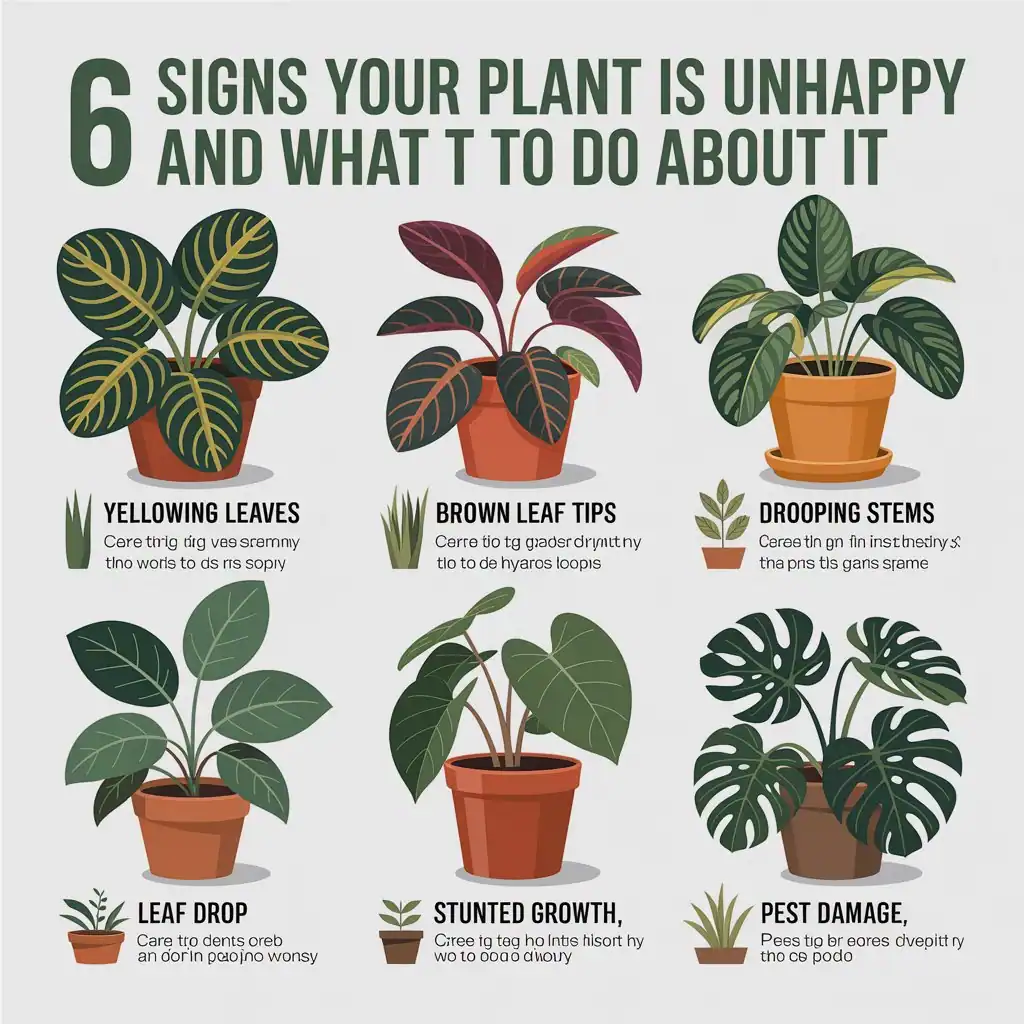
6 Signs Your Plant Is Unhappy and What to Do About It
Plants may not speak, but they clearly show when something isn’t right. Changes in leaves, growth, and overall appearance are signals that your plant needs attention. Recognizing these signs early can help you fix problems before they become serious and keep your plants healthy.
1. Yellowing Leaves
Yellow leaves are one of the most common warning signs. This can happen due to overwatering, poor drainage, or lack of nutrients.
What to do: Check the soil moisture first. If it’s too wet, reduce watering and ensure proper drainage. If the soil is dry, adjust your watering schedule.
2. Drooping or Wilting
A drooping plant often indicates stress, usually from too much or too little water.
What to do: Feel the soil. If it’s dry, water your plant. If it’s overly wet, allow it to dry out and improve drainage.
3. Brown or Crispy Leaf Edges
Dry, brown edges can be a sign of low humidity, underwatering, or too much direct sunlight.
What to do: Increase humidity if needed, water consistently, and move the plant to a spot with more suitable lighting.
4. Slow or Stunted Growth
If your plant isn’t growing as expected, it may not be getting enough light or nutrients.
What to do: Move it to a brighter location and consider adding a small amount of fertilizer during its growing season.
5. Leaves Falling Off
Sudden leaf drop can be caused by environmental changes, overwatering, or stress.
What to do: Check for changes in temperature, light, or watering habits and try to keep conditions stable.
6. Pale or Faded Leaves
Leaves that lose their vibrant color may indicate insufficient light or nutrient deficiencies.
What to do: Provide more light and ensure your plant is receiving proper nutrients.
Final Thoughts
Unhappy plants usually give clear signals—you just need to know how to read them. By paying attention to changes and adjusting your care routine, you can quickly bring your plants back to health. Small corrections can make a big difference in helping your plants thrive.